A bathroom vanity faces daily pressure from water, cosmetics, toothpaste, and hurried mornings. The right countertop should handle these routines without demanding constant attention. That is why many homeowners ask, “Why should I use quartz for vanity countertops?” Quartz offers a practical balance of durability, appearance, and maintenance. Its engineered surface comes in marble-inspired patterns, warm neutrals, and clean modern colors. A small bathroom can feel brighter with a pale quartz top and a simple undermount sink.
In professional countertop projects, quartz is often selected for its consistent quality and predictable fabrication. It is nonporous, so spilled foundation or shaving cream usually stays on the surface instead of soaking in. Regular cleaning with mild soap and water is typically enough. No sealing schedule. That convenience matters in busy households. However, quartz is not indestructible. Excessive heat, harsh chemicals, or poorly supported overhangs can still cause damage. Some patterns may also appear less natural than genuine stone when viewed closely. This is where careful product selection matters. Samples can look different under warm bathroom lighting. Measure twice.
The seven reasons explored in this guide focus on real vanity concerns: hygiene, durability, design flexibility, cleaning, installation, value, and long-term practicality. Reliable advice should include limitations, not only attractive promises. A qualified fabricator can confirm slab suitability, edge details, sink cutouts, and cabinet support before installation. With those details handled properly, quartz can provide a polished vanity surface that remains useful long after the initial renovation excitement fades.
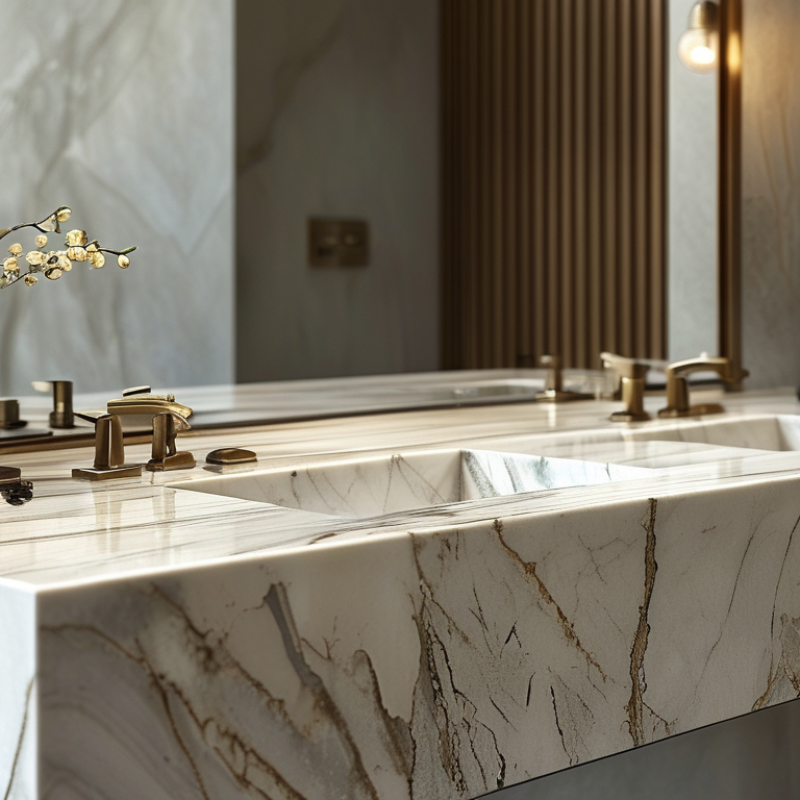
Quartz is an engineered surface made from natural quartz particles, resin, and color pigments. This composition gives it a dense, stable structure for bathroom use. Unlike porous stone, quality quartz usually resists water absorption, soap residue, and common cosmetic stains. That matters around a sink, where small spills often sit unnoticed.
Its practical advantages are clear. Quartz offers strong resistance to scratches from daily grooming items. It also provides consistent color, which helps create a clean vanity design. Many patterns imitate marble or concrete without requiring the same sealing routine. Smooth surfaces are easier to wipe, supporting better bathroom hygiene. Quartz also handles frequent use without demanding complicated maintenance. A damp cloth and mild cleaner are often enough. Its reliable appearance can make planning easier, especially when matching cabinets, mirrors, and wall finishes.
Still, quartz is not flawless. It is not completely heatproof, so a hot curling iron should not rest directly on the counter. Seams may remain visible, particularly on long vanities. Dark colors can also show water spots more easily. In my experience, a small sample viewed under bathroom lighting prevents disappointing color choices. Professional measuring and installation remain important, because an attractive slab cannot correct an uneven cabinet. The best quartz vanity is not merely fashionable; it fits the room’s moisture, cleaning habits, and daily routines.
| Reason | What Quartz Is | Relevant Data | Why It Fits Vanity Countertops | Care Consideration |
|---|---|---|---|---|
| 1. Low water absorption | An engineered surface made primarily from ground quartz minerals, resin binders, and pigments. | Water absorption: generally less than 0.5% for compliant engineered quartz surfaces. | Bathrooms regularly encounter splashes, damp toiletries, and condensation. Low porosity helps reduce liquid penetration and staining. | Wipe standing water from seams and around the sink, especially where water may remain for long periods. |
| 2. Easy daily cleaning | A nonporous manufactured slab with a sealed, factory-finished surface. | Routine care: mild soap, warm water, and a soft cloth are typically sufficient. | Toothpaste, cosmetics, soap residue, and water marks can usually be removed without specialized maintenance. | Avoid abrasive powders, scouring pads, and harsh chemicals that may dull or damage the finish. |
| 3. Strong resistance to scratches | Quartz minerals are among the harder common minerals used in residential surfaces. | Mineral hardness: quartz measures approximately 7 on the Mohs hardness scale. | The surface can withstand normal vanity use, including toiletries, grooming tools, and decorative items, when handled properly. | Do not drag gritty containers across the countertop, and do not use the surface as a cutting board. |
| 4. Consistent appearance | A controlled blend of mineral particles, binders, and pigments produced in slab form. | Design range: available in solid colors, fine patterns, and veined styles with more predictable visual consistency than many natural stones. | A vanity can be coordinated more easily with wall tile, cabinetry, mirrors, and flooring. | View a full-size sample when possible because lighting and slab position can affect how color and pattern appear. |
| 5. Minimal sealing requirements | Unlike many porous natural stones, engineered quartz generally does not require routine penetrating sealer. | Typical maintenance: no periodic resealing under normal residential use; follow the surface manufacturer’s care instructions. | Less maintenance is convenient in a bathroom, where access around faucets, backsplashes, and wall edges can be difficult. | Seams, edges, and the area around plumbing still need regular cleaning and inspection. |
| 6. Reliable fabrication options | Factory-produced slabs can be cut and finished into vanity tops, backsplashes, sink openings, and edge profiles. | Common thicknesses: approximately 12 mm, 20 mm, and 30 mm, depending on the product and installation system. | It supports many bathroom layouts, including single-sink, double-sink, wall-mounted, and furniture-style vanities. | Professional measurement and installation are important around cutouts, overhangs, seams, and wall irregularities. |
| 7. Durable in normal indoor conditions | A rigid composite surface designed for interior residential applications. | Temperature guidance: quartz tolerates normal bathroom temperatures but can be damaged by sudden or prolonged high heat; many care guides recommend avoiding direct heat above approximately 150°F / 65°C. | Bathrooms are generally stable indoor environments, making quartz a practical long-term option when installed and maintained correctly. | Do not place hot styling tools directly on the surface; use a heat-resistant mat and avoid outdoor or high-heat applications unless specifically approved. |
Note: Performance values and care requirements can vary by slab composition, finish, thickness, installation method, and product specifications. Always follow the care and installation instructions supplied with the selected surface.
Its dense surface resists toothpaste, cosmetics, soap, and moisture. It feels solid during ordinary daily use. That matters around sinks.
Quartz rates about 7 on the Mohs hardness scale. It resists routine scratches better than many softer surfaces. Still, sharp tools can mark it.
Not directly. Place curling irons, straighteners, and hot dryers on a heat-resistant pad. Excessive heat may cause discoloration or surface damage.
Use a soft cloth, warm water, and mild cleaner. These usually remove toothpaste and cosmetic residue. Avoid abrasive powders, which can dull the finish gradually.
No surface is completely stain-proof. Its low porosity helps limit absorption from common bathroom spills. Wipe spilled makeup or hair products promptly.
Accurate measurements, balanced support, and careful templating matter. Extra attention is needed around faucets and undermount sinks. Weak support can make strong quartz seem unreliable.
Yes, repeated drops may create small chips. Heavy objects and sharp impacts can damage edges or corners. Use a tray for large bottles.
Yes, it comes in soft whites, charcoal shades, and stone-inspired patterns. Consistent veining can simplify cabinet and backsplash coordination. The appearance may feel less natural than genuine stone.
Properly selected and installed quartz can remain attractive for years. Its durability supports long-term daily use. But expectations should stay realistic. It is not indestructible.
Quartz is a practical and attractive choice for vanity countertops because it combines engineered strength with everyday convenience. Made from natural quartz particles and durable binders, it creates a solid, dependable surface that can handle regular bathroom use for many years. It resists moisture, common stains, scratches, and bacterial buildup better than many porous countertop materials, making it well suited to a humid environment. If you are asking, “Why should I use quartz for vanity countertops,” the answer begins with its reliable performance and long-term durability.
Quartz also makes bathroom care simple. Its nonporous surface usually needs only mild soap, water, and a soft cloth for routine cleaning, without frequent sealing. In addition, it is available in a wide range of colors, patterns, and finishes, allowing it to complement both modern and traditional bathroom designs. With its low-maintenance surface, hygienic qualities, consistent appearance, and lasting value, quartz offers a balanced solution for homeowners seeking beauty, strength, and convenience in one vanity countertop.

 Arpacılar Home