China’s top bathroom furniture manufacturers are increasingly treating moisture resistance as a performance standard, not a marketing phrase. Bathrooms create repeated exposure to steam, splashes, wet towels, and standing water. These conditions can enter through cabinet edges, screw holes, joints, and damaged finishes. Small gaps matter.
Why is moisture resistance important for bathroom furniture? It protects the cabinet’s structure, appearance, hygiene, and service life. A moisture-resistant vanity is less likely to swell, warp, delaminate, or develop musty odors. It also keeps doors aligned and drawers moving smoothly after years of daily use. Dr. Mark Knaebe, a respected wood scientist associated with the USDA Forest Products Laboratory, has stated, “Moisture is the single most important factor affecting wood durability.” His observation applies directly to bathroom cabinetry.
Reliable Chinese suppliers should explain their materials clearly. Look for sealed edges, water-resistant panels, corrosion-resistant hardware, and finishes tested under humid conditions. Marine plywood, high-density moisture-resistant boards, and properly sealed MDF can all perform well. However, construction quality remains decisive. A premium board cannot compensate for an unsealed cut edge.
This is where buyers need careful judgment. “Waterproof” is often used too loosely. It may describe the surface only, not the entire cabinet. Ask for test methods, absorption data, and warranty terms. Check the underside of the basin area. Examine the back panel and hinge zones.
Good furniture still needs ventilation and sensible cleaning. No cabinet survives unlimited water. That uncomfortable point deserves attention. Performance depends on both manufacturing discipline and everyday care. With transparent specifications, experienced production, and realistic maintenance, China-made bathroom furniture can offer durable value in demanding environments.
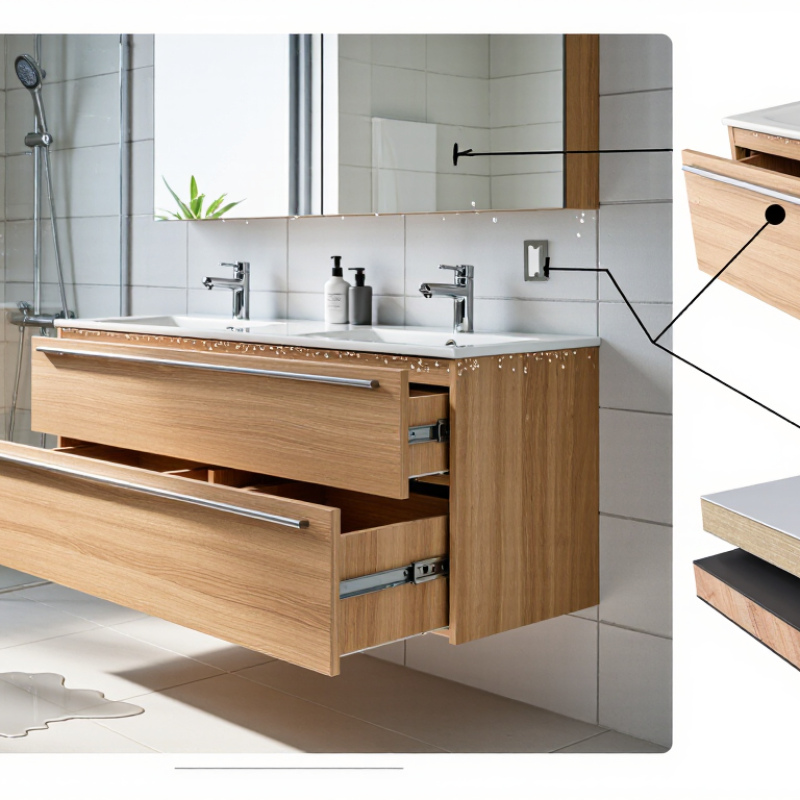
China’s top bathroom furniture is defined by disciplined construction, not decoration alone. Moisture resistance begins with the cabinet core, edge sealing, hardware, and installation details. A vanity may look elegant under showroom lights, yet swell beside a leaking trap. That is the real test.
Professional buyers often examine panel density, water absorption, coating adhesion, and formaldehyde emissions. Products should be tested against applicable Chinese standards, including GB/T 24977 for bathroom supporting equipment, while suppliers should provide traceable laboratory reports. The 2024 Global Bathroom Furniture Market analysis by Grand View Research identified continued market growth, driven by renovation and urban housing demand. This trend increases pressure on manufacturers to deliver longer service life, not merely lower prices.
Ventilation also matters. The U.S. Environmental Protection Agency links persistent indoor dampness with mold risks, making moisture control a building issue, not just a furniture issue. In practical inspections, check sealed edges with a fingernail, inspect hinge corrosion, and measure the cabinet’s clearance from wet flooring. Small gaps help.
However, no panel is permanently waterproof. That claim deserves skepticism. Poor installation can defeat excellent materials. Some manufacturers still describe “moisture-resistant” too broadly, without publishing absorption data or test conditions. China’s top bathroom furniture should combine tested materials, accurate machining, replaceable hardware, and clear maintenance guidance. A beautiful cabinet that fails after one humid season is not truly top-tier.
It helps prevent swelling, cracking, stains, and hidden damage. Small leaks can remain unnoticed for weeks.
Moisture-resistant plywood suits cabinet bodies when its edges are sealed. PVC foam board absorbs little water. Stainless steel and aluminum resist rust when their finishes remain intact.
No material is perfect. Water can still enter through damaged seals, rear joints, or screw holes. Moisture resistance lowers risk, but does not replace maintenance.
Wipe splashes quickly, especially around hinges and drawer corners. Inspect edge seals every few months. Repair lifting seals or visible gaps promptly.
Run an exhaust fan for about 20 minutes after bathing, when practical. Open a window or cabinet doors briefly. Warm, trapped moisture slows drying.
Use mild soap diluted with warm water. Avoid abrasive powders, rough sponges, bleach, and solvents unless approved. Dry surfaces immediately.
Yes. Wet towels release moisture slowly and may dampen panels or interiors. Store them elsewhere, and keep dripping items outside cabinets.
Examine hinges, screw covers, silicone lines, edge seals, and the floor below. A loose hinge may expose an unsealed edge. Small dark lines deserve attention, not assumptions.
China’s top bathroom furniture combines reliable construction, practical design, and materials selected for humid environments. Why is moisture resistance important for bathroom furniture? Constant exposure to steam, splashes, and changing temperatures can cause swelling, warping, peeling, mold growth, and weakened joints. Moisture-resistant furniture helps maintain its shape, appearance, hygiene, and service life, making it a more dependable choice for daily use.
Common materials include treated solid wood, moisture-resistant engineered boards, PVC, stainless steel, and sealed surface finishes. Before buying, check the core material, edge sealing, coating quality, hardware protection, and product performance information. Look for smooth surfaces, firmly sealed edges, and construction designed to limit water penetration. Proper care also matters: wipe away standing water, improve bathroom ventilation, avoid harsh cleaners, and inspect joints and hardware regularly. With suitable materials, careful evaluation, and consistent maintenance, bathroom furniture can perform well and retain its appearance for many years.

 Arpacılar Home