Soft-close drawer slides promise quiet movement, yet installation often feels strangely unforgiving. A drawer may sit three millimeters too high, scrape the cabinet side, or refuse to close completely. Small errors become obvious when the spring-loaded mechanism engages.
The 2024 U.S. Houzz Kitchen Trends Study reported that 76% of renovating homeowners upgraded their cabinets. That figure reflects stronger demand for practical storage, smoother operation, and better hardware. Industry guidance from Blum and Accuride also stresses accurate measurements, matched slide positions, and a rigid cabinet box. These details explain why learning How to install soft-close drawer slides requires more than attaching runners with screws.
Woodworking educator Paul Sellers often states, “Accuracy is everything.” His point applies directly here. Soft-close hardware exposes weak layout work. Even experienced installers can misread the drawer-box width or overlook a slightly twisted cabinet. That mistake deserves attention, not embarrassment.
A reliable installation begins with the manufacturer’s clearance specification. Most side-mount systems require equal space on both sides, while undermount systems demand precise drawer-bottom and rear-notch dimensions. A tape measure, square, drill, and thin shims can prevent costly corrections. Still, tools do not replace judgment.
This guide examines why soft-close slides are hard to install, where common failures begin, and how careful adjustments restore smooth closing. The process is manageable. It is not always forgiving.
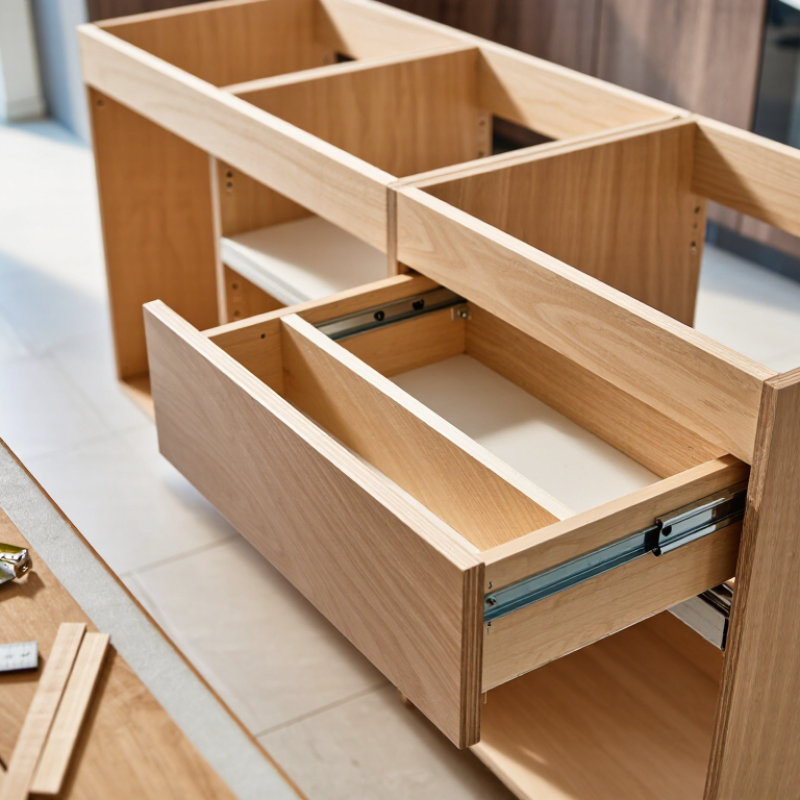
Drawer slides look simple until their internal parts must work together. Each slide contains a cabinet rail, drawer member, bearing carriage, spring, damper, and locking catch. The soft-close damper slows the drawer during the final few inches. The catch must also engage at the correct position. Even a small alignment error can interrupt that movement.
In cabinet installations, I have found that side clearance causes many problems. A drawer box may need only a narrow, even gap on both sides. If one side is tighter, the drawer twists slightly while closing. The damper then meets extra resistance instead of pulling the drawer smoothly. The cabinet rails must remain parallel, level, and firmly attached. A difference of one or two millimeters can change the closing feel noticeably.
The drawer bottom and front also affect the mechanism. Screws placed too close to an edge may distort thin material. Over-tightening can pull a rail inward. It feels unforgiving. Measuring the opening at the front, middle, and back is more dependable than trusting one measurement. I sometimes recheck this step after installation because the first reading can look perfect while the drawer still drifts. That small mistake is easy to miss. The mechanism is precise, but wood rarely behaves perfectly.
Soft close drawer slides are often difficult to install because small measurement errors become obvious during closing. The 32 mm system helps create a repeatable cabinet layout. Mark hole positions from a fixed reference line, usually the cabinet bottom or top. Keep each slide at matching heights on both sides. A one-millimeter difference can make the drawer feel uneven.
The 12.7 mm side clearance is equally important. Measure the cabinet opening at the front, middle, and back. Then calculate the drawer width by subtracting 25.4 mm from the narrowest opening. Do not trust one measurement. Wood panels can move slightly, and painted surfaces may reduce usable space. Leave the slides parallel, not merely level. This distinction matters.
During installation, I usually fit the slides loosely first. The drawer should move without scraping before the screws are fully tightened. Check the front gap with the drawer closed. It should look consistent from corner to corner. I have sometimes blamed the slide when the real problem was a cabinet side that was not square. That mistake is easy to repeat. A thin spacer can help confirm the 12.7 mm clearance, but it should not force the slide into place. If the drawer needs pressure to close, recheck the opening, hole alignment, and rear mounting position.
The drawer-box width is calculated by subtracting 12.7 mm of side clearance from both sides of the cabinet opening: drawer-box width = opening width − 25.4 mm. The 32 mm system refers to the 32 mm spacing commonly used for cabinet-system holes and slide mounting positions. Always verify the slide manufacturer’s installation specification before cutting or drilling.
Why Are Soft Close Drawer Slides Hard to Install?
Soft-close drawer slides often feel difficult because they magnify small alignment errors. The rails must stay level, parallel, and firmly seated. A one-millimeter error can create rubbing, uneven gaps, or incomplete closing. The drawer may look square, yet the slides can still fight each other.
Measure from the cabinet floor, not from a decorative face frame. Mark both rail positions with the same reference point. Check the left and right heights with a spirit level. Then measure the front and rear spacing. Keep the difference within ±1 mm. A temporary spacer helps maintain equal gaps during fastening. Do not tighten every screw immediately. Leave slight movement, check the drawer, then secure the rails. This small step is easy to skip.
ISO 2768-1 lists general dimensional tolerances for manufactured parts. For lengths between 400 and 1,000 mm, its medium tolerance is approximately ±0.8 mm. That benchmark explains why a nominally small installation error matters. The ±1 mm target is a practical site allowance, not a universal slide specification. The 2024 U.S. Houzz Kitchen Trends Study reported that 76% of renovating homeowners upgraded their cabinets. More upgraded drawers mean more installations where precision matters. In practice, I still occasionally tighten one side too early. The drawer reveals the mistake immediately. Rechecking parallelism usually solves it faster than adding force.
Why Are Soft Close Drawer Slides Hard to Install?
Load matching is often the hidden problem. EN 15338 evaluates extension hardware through defined load classes, commonly ranging from 5 to 50 kilograms, depending on the test category and product design. These figures are test loads, not automatic installation promises. A drawer holding 18 kilograms should not receive a 20-kilogram slide without checking the drawer width, fixing method, and movement conditions.
I have seen installers weigh only the contents. That is incomplete. The calculation should include the drawer box, front panel, runners, and hardware. A solid timber drawer can add several kilograms before storage begins. Uneven loading also changes the result. A heavy toolbox placed near the front creates more stress than evenly distributed clothing.
FIRA furniture-testing guidance treats durability as more than static capacity. Repeated opening, closing, alignment, and fixing strength affect performance. The European standard therefore supports a broader assessment than a single kilogram figure. Soft-close resistance adds another variable. If the slide is under-rated, the drawer may stop short, close unevenly, or feel stiff. If it is over-rated, installation is not automatically easier. I still find this assumption in real workshops. The better method is simple: weigh the complete drawer, add a practical safety margin, then compare that figure with the manufacturer’s EN 15338 test class and fitting conditions. Measure twice. Recheck after loading.
| Drawer Application | Empty Drawer Weight (kg) |
Maximum Contents (kg) |
Calculated Working Load (kg) |
Suggested Rated Capacity (kg) |
Reference Load Class | Typical Installation Risk |
|---|---|---|---|---|---|---|
| Bedroom accessories | 4 | 6 | 10 | 15 | 15 kg | Excessive front pressure or uneven side gaps can prevent the soft-close mechanism from engaging. |
| Office supplies | 5 | 10 | 15 | 20 | 20 kg | Misaligned runners increase friction, so the drawer may stop before the damper reaches its activation position. |
| Kitchen utensils | 7 | 13 | 20 | 30 | 30 kg | Incorrect cabinet width or mounting height can make one runner carry more load than the other. |
| Pots and cookware | 9 | 21 | 30 | 40 | 40 kg | A heavy load combined with a narrow or flexible cabinet can cause binding and incomplete closing. |
| Pantry storage | 11 | 29 | 40 | 50 | 50 kg | Overloading, poor screw fixing, or insufficient cabinet rigidity can cause sagging and high opening force. |
| Deep heavy-duty storage | 14 | 36 | 50 | 60 | 60 kg | A capacity mismatch may overload the runners during opening, closing, or accidental one-sided loading. |
Why Are Soft Close Drawer Slides Hard to Install?
Final testing often reveals problems that installation measurements miss. Pull the drawer fully open and check whether both slides travel evenly. The drawer should remain level, with no sudden drop or sideways movement. Measure the visible gaps along the top and sides. Uneven gaps usually indicate poor alignment, not a defective slide.
Push the drawer closed slowly. It should engage the latching mechanism smoothly before the soft-close action begins. Listen for a clean click. A harsh snap may indicate that the drawer is too heavy, misaligned, or not fully seated. Do not force it. Remove the drawer and inspect the rear brackets, mounting screws, and slide members for contact marks.
The final test should include several opening and closing cycles. Watch the last few centimeters closely. The drawer should slow down steadily and finish flush with the cabinet face. Binding often appears only near full closure. I have found that one slightly over-tightened screw can create this problem. Loosening it by a quarter turn sometimes restores smooth travel, although this is not a substitute for proper alignment.
Test the drawer with its normal load, not an empty box. Weight can change the movement noticeably. Check again after loading it with everyday items. A successful installation feels quiet, controlled, and repeatable. Small resistance deserves attention. It rarely improves by itself.
Their damper, spring, bearing carriage, and locking catch must work together. Small alignment errors can interrupt closing.
Keep the rails level, parallel, and within about ±1 mm. Small errors matter.
Measure from the cabinet floor, not the decorative face frame. Use the same reference point on both sides.
Measure the front, middle, and back widths. Uneven readings often reveal hidden cabinet movement.
The drawer can twist slightly during closing. The damper then meets extra resistance and may stop early.
No. Leave slight movement, test the drawer, then tighten the screws. This prevents early mistakes.
It keeps both rail gaps consistent during fastening. A simple spacer can prevent repeated adjustments.
Yes. Screws near thin edges may distort the material. Over-tightening can also pull a rail inward.
Recheck rail parallelism, level, and side clearance before adding force. Force usually hides the real problem.
The drawer may look square while the rails fight each other. I sometimes trust appearance too soon.
Soft-close drawer slides can be difficult to install because their internal dampers and latching parts require tighter positioning than standard slides. To understand how to install soft-close drawer slides, first measure the cabinet and drawer carefully. Follow the 32 mm system where applicable and allow approximately 12.7 mm of side clearance on each side. Even small measurement errors can prevent the drawer from operating smoothly.
During installation, keep both rails level, parallel, and aligned within about ±1 mm. Check that the selected slides can support the drawer’s total weight according to the relevant EN 15338 capacity requirements. After fastening the rails, test the drawer through its full travel. Confirm that it closes evenly, engages the latch, and activates the soft-close function without rubbing, sticking, or excessive force. If binding occurs, inspect the side clearance, rail alignment, screw placement, and cabinet squareness before making final adjustments.
